Blog · Play
What Are 'Web Puppies'? Why Jumping Spiders Are a Social Media Sensation
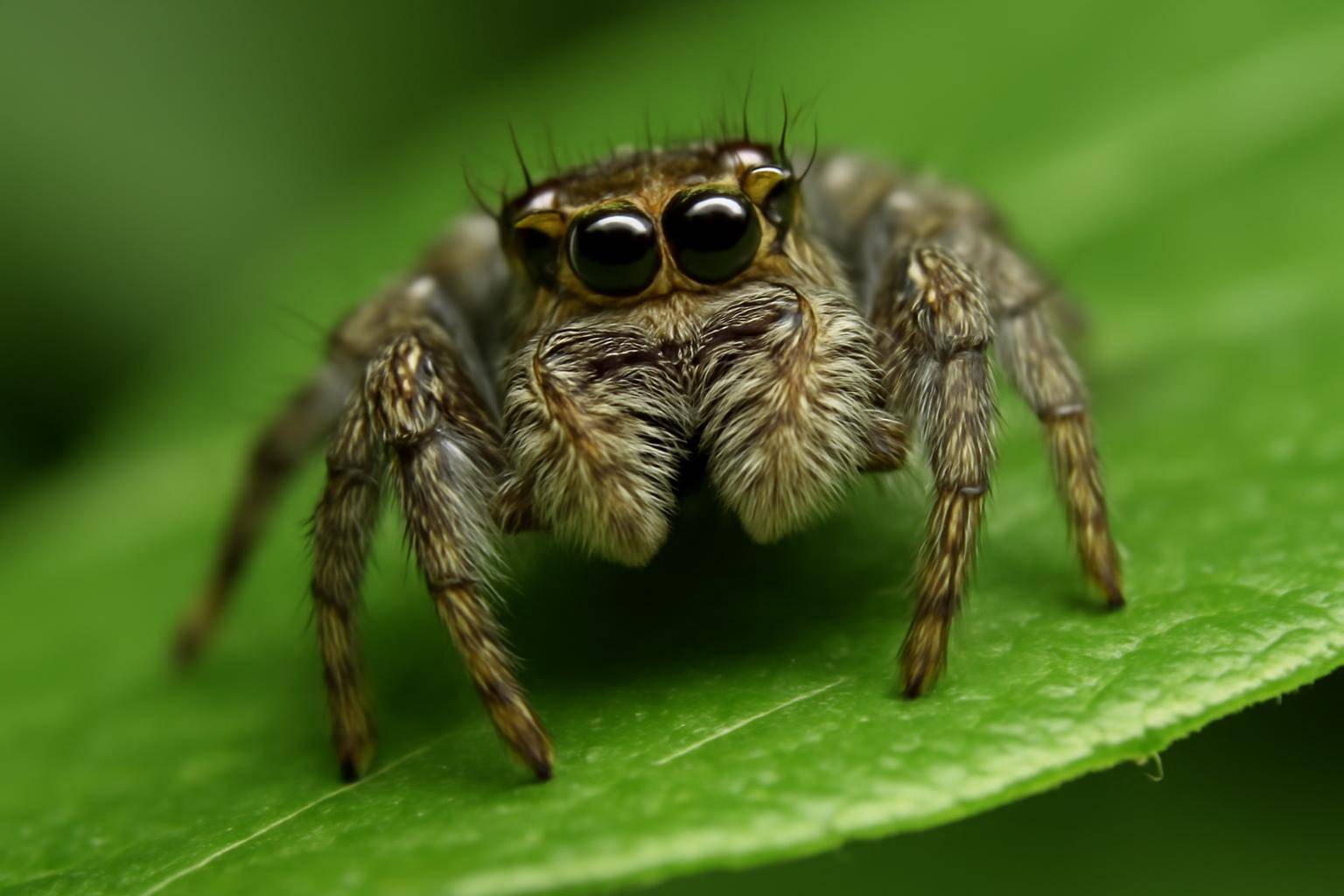
"Web puppies" is the nickname that has stuck to jumping spiders online, tiny arachnids whose forward-facing eyes and head-tilting curiosity read to a lot of viewers as puppyish rather than creepy. The Guardian's Pets section traced how the name took hold, and the comparison is doing a lot of work for people who would otherwise scroll past an insect.
Why do jumping spiders get called 'web puppies'?
The label leans on behavior people already associate with dogs: alertness, apparent eye contact, and a kind of head cock that reads as attentiveness. Jumping spiders belong to the family Salticidae, one of the largest spider groups, and they are built differently from the web-spinning spiders most people picture. They do not sit still waiting for prey to wander into silk. Instead they stalk and pounce, which means they are constantly scanning their surroundings, and that scanning is what gets captured on video and shared as something closer to a pet reaction than an insect reflex.
The nickname also does some rebranding. Most coverage of spiders leans on fear, size, or venom. Calling a species a "puppy" flips that script before anyone has watched a single clip, which is part of why the name travels well even to people who would normally avoid anything with eight legs.
What makes these spiders look so expressive on camera?
Jumping spiders have unusually large principal eyes relative to their body size, positioned forward on the head rather than spread around it the way many other spiders' eyes are arranged. That forward placement gives them a face-forward look that mammals, including humans, tend to read as attentive or even emotional, even when no emotion is actually being displayed. Combine that with their habit of turning the head and front legs toward movement, and close-up footage can look a lot like a small animal noticing you rather than an arachnid reacting to a shadow.
None of that means the spiders are performing for an audience. It means their ordinary hunting behavior happens to map onto cues people already associate with curious pets, and video makes that mapping obvious in a way that a quick glance in the garden does not.
Where is the nickname spreading fastest?
The Guardian's piece frames this as a social media phenomenon rather than a scientific reclassification, and that framing matters. The "web puppies" tag is a shorthand people use when sharing clips and photos, not a term entomologists are adopting in research. Its spread tracks with how short-form video and photo sharing work generally: a close-up that gets a strong reaction gets reposted, remixed, and recaptioned, and the caption that sticks is the one that is easiest to repeat. "Web puppies" fits that bar.
Is it fine to have one in your home?
The source material covers the trend itself rather than care guidance, so the honest answer is to treat jumping spiders the way you would any wild animal you are curious about: observe without handling, and do not assume a nickname changes what the creature actually is. They are still predatory arachnids going about normal behavior, and the "puppy" framing is a human read on that behavior, not a description of temperament or domestication.
What the trend does capture is something worth noticing about how animal content spreads now. A clip does not need a dramatic hook to catch on; it just needs a detail that lets viewers project something familiar onto something unfamiliar. A spider that seems to look back at the camera does that cheaply and reliably, which is likely why a single nickname was enough to turn a common backyard find into coverage in a national pets section.
Does the 'web puppies' label apply to every spider you spot?
No, and that distinction matters. The Guardian piece describes Salticidae as one of the largest spider families, not a single species, which means the nickname covers a wide range of jumping spiders rather than spiders in general. The clips showing forward-facing eyes and curious head tilts come from this family specifically, not from orb weavers, wolf spiders, or house spiders people are more likely to startle while gardening or cleaning. Those other species still build silk traps or ambush from crevices, and most lack the oversized, forward-set eyes that make jumping spiders photogenic enough to earn a dog comparison in the first place.
That matters if the nickname nudges someone toward getting a close-up photo of whatever is nearby. A spider that appears to make eye contact is still doing what jumping spiders do: tracking motion before deciding whether to retreat or pounce. Treating every backyard spider like a "web puppy" risks misreading an unrelated species, so the nickname is best understood as describing one family's behavior, not spiders broadly.
More from the blog
Written by Smorgi Apps at Smorgi Apps. We do not invent download counts or ratings. If a number appears here, it came from App Store Connect or the live listing.