Blog · Play
Halloween Party Games That Actually Work for Every Age at the Table
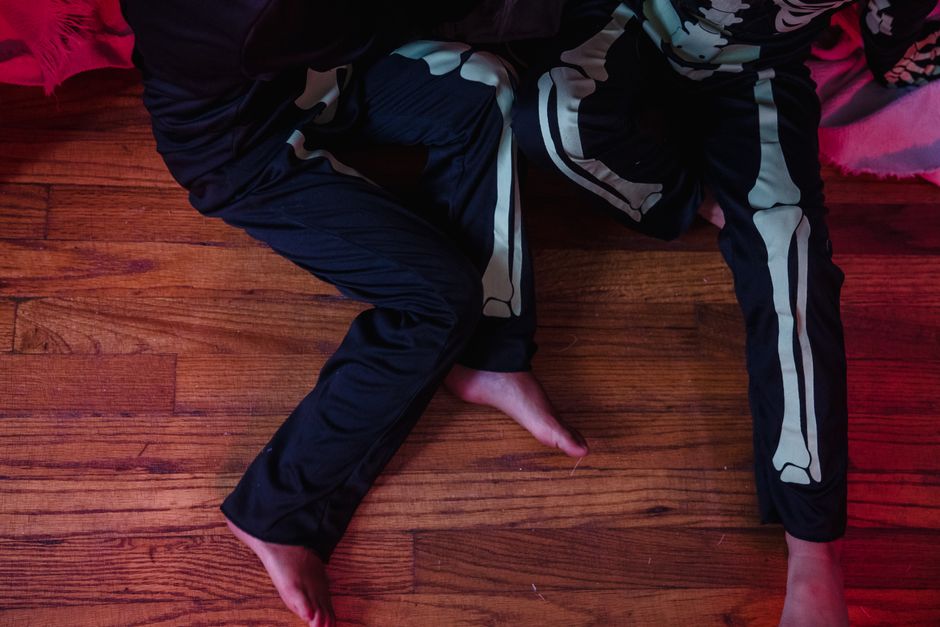
A good Halloween party game has to work for a six-year-old in a dinosaur costume and a grandparent who just wants to sit down, and that constraint is what The Pioneer Woman's roundup of this year's picks is built around. We've run enough mixed-age holiday gatherings ourselves to know why some activities get adopted every year and others get played once and shelved.
What Makes a Halloween Game Work for Both Kids and Grandparents?
The rule has to fit in one sentence, spoken out loud, with no card to read. The second anyone has to stop and explain a point system or a special exception, half the table checks out, and the other half starts arguing about whether the exception applies. Charades-style guessing, simple relay tasks, and anything scored by "first team to finish" clear that bar. Trivia with a strict answer key does not, because it quietly favors whoever already knows the most horror movies.
Age-proofing also means the fun can't live entirely in reading comprehension. A printed scavenger hunt list works for a mixed group only if the clues are picture-based or spoken aloud for younger players. Swap text for props, sounds, or gestures and the same round plays for a four-year-old and a sixty-year-old without anyone being carried by the group.
How Many Players Does Each Round Need to Stay Moving?
Rounds that cap out around four to six people per small team keep the pace up, because everyone gets a turn within a minute or two instead of waiting through a long line. A costume-guessing or mummy-wrap relay with eight people split into two teams of four moves faster than the same activity run as one line of eight waiting for a turn each.
If the guest list is bigger than that, the fix isn't a longer round, it's running two rounds side by side. Set up a second station with the same supplies and split the room. The party feels busier, not slower, and nobody stands around watching.
Why Do Low-Prep Options Win at a Last-Minute Gathering?
The activities that actually get played are the ones built from what's already in the house: a roll of toilet paper for a mummy wrap, a deck of cards, a bag of candy for a counting or sorting challenge, a bedsheet. Anything that requires a trip to a party store the morning of tends to get cut when the oven timer goes off and the doorbell starts ringing with trick-or-treaters.
This is also where a one-sentence rule pays off twice. A host who can explain a round while stirring cider doesn't need a rehearsal, and guests who show up at staggered times can be looped into an activity already in progress without a recap.
Which Formats Keep Everyone Playing Until the End?
Elimination rounds are the fastest way to turn half a party into spectators. A guessing game where the loser sits out for the rest of the night works fine for a tight-knit friend group competing seriously, but at a family gathering it tends to bench the shyest kid in the first round and keep them on the sidelines for an hour.
Rotating roles instead of eliminating players keeps the room engaged longer. If someone is the clue-giver one round and a guesser the next, everyone cycles back into the action instead of watching from a chair. It's a small structural choice, but it's the difference between a game that runs for twenty minutes and one that quietly dies after five.
Where Can You Find This Year's Specific Picks?
For the actual list of games, costumes, and setup ideas for this particular Halloween, The Pioneer Woman's piece is the source worth reading in full. Use the filters above — one-sentence rules, small team sizes, pantry-shelf supplies, no early benching — to decide which of those picks are worth setting up and which ones to skip this year.
The short version: the games that survive a party full of mismatched ages aren't the cleverest ones on the list. They're the ones a tired host can explain once, with stuff already sitting in a kitchen drawer, to a room where nobody gets sent to the sidelines.
More from the blog
Written by Smorgi Apps at Smorgi Apps. We do not invent download counts or ratings. If a number appears here, it came from App Store Connect or the live listing.