Blog · Sleep
Does watchOS 27 Change How Apple Watch Tracks Your Sleep?
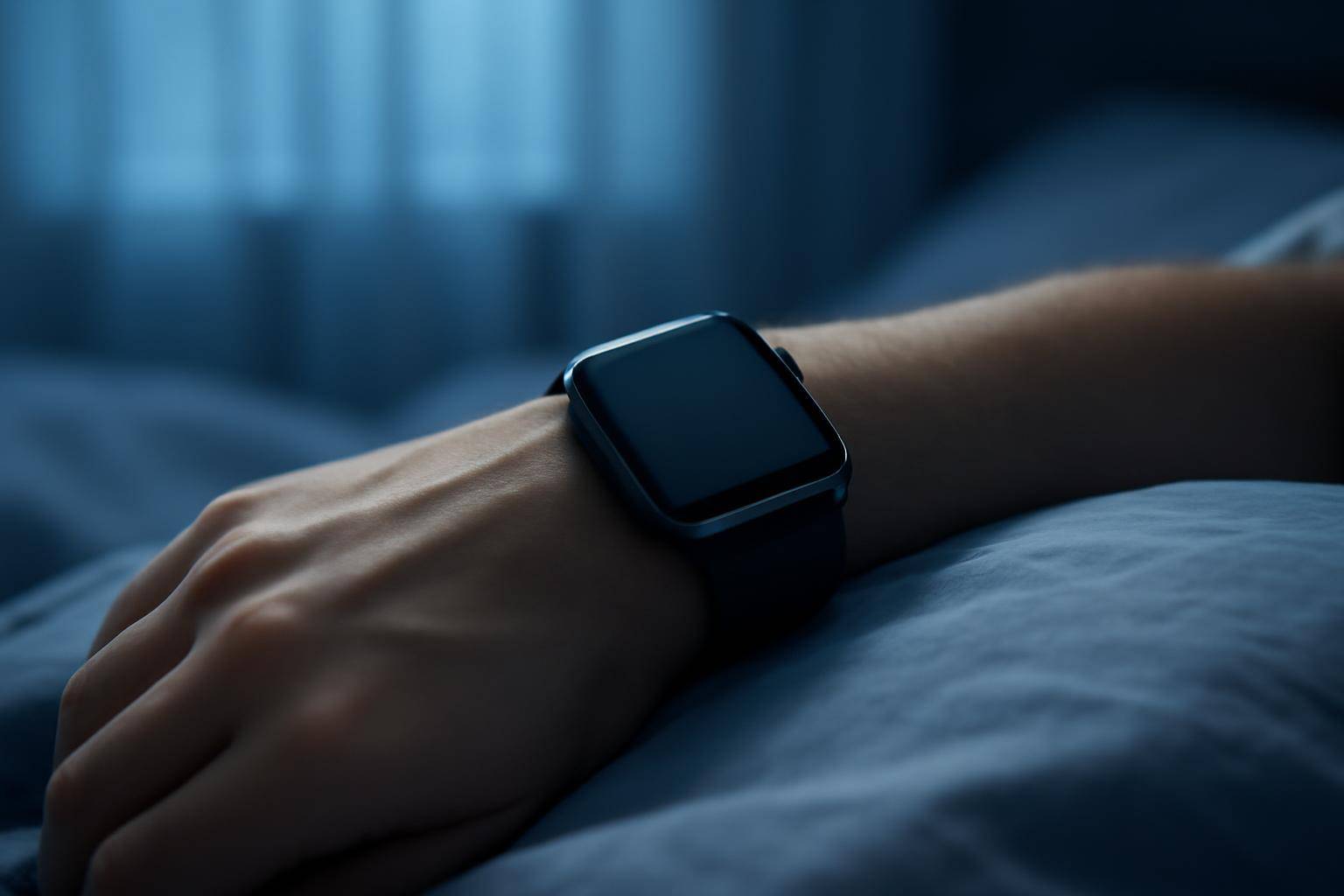
No. Apple Watch sleep tracking in watchOS 27 still requires wearing the device overnight — Mac Observer's rundown of confirmed changes for Series 12 and Ultra 4 doesn't drop that rule, it refines what the watch logs once it's already on your wrist.
That distinction matters because the watch has needed overnight wear since stage-level detail became part of the feature. The sensors that separate light, deep, and REM stages — accelerometer, optical heart rate, and wrist temperature — sit on the device itself. None of them function from a nightstand charger.
What's confirmed so far
- Scope: Series 12 and Ultra 4, per Mac Observer's report
- Core requirement unchanged: the watch must be worn overnight for stage data
- iPhone fallback: motion-based bedtime and wake estimate, no stage breakdown
What does watchOS 27 change for sleep tracking?
Mac Observer's write-up walks through the update for Series 12 and Ultra 4 and frames it as a refinement of how existing data gets recorded and shown, rather than a new sensor package. The underlying setup most owners already know — Sleep Score, stage breakdowns, respiratory rate — stays built on the same hardware Apple has shipped on recent models. For the specific line-by-line list of what's confirmed, the source article has it in full.
Why do you still need to wear the watch overnight?
Stage detection isn't a software trick layered on top of a clock. It comes from combining three live readings: wrist movement from the accelerometer, pulse from the optical heart rate sensor, and small shifts in skin temperature across the night. Apple cross-references those signals to decide when someone moved from light rest into deep or REM stages. A watch sitting on a charger a few feet away can't supply any of that, no matter how current its software is. That's why an update to the operating system doesn't touch the wear requirement — it's a hardware dependency, not a setting.
Can iPhone track sleep without the watch?
It can, within limits. iPhone's Health app can estimate when someone went to bed and when they got up using motion sensing from the phone itself, which is useful on nights the watch is charging or left behind. What it can't do is reproduce the stage-by-stage picture — there's no way for a phone sitting on a nightstand to read a pulse or catch the small movements that separate deep rest from lighter stages. This is the practical version of the headline question: skipping the watch doesn't mean losing all data, it means losing the detail that makes the feature worth checking in the morning.
Which models does the watchOS 27 sleep update reach?
Mac Observer's report keeps its scope to Series 12 and Ultra 4, the current lineup running the new software. That's worth flagging because confirmed changes for those two models don't automatically carry over to older Apple Watch hardware, which may lack the same sensor set or run different thresholds for stage detection. If someone's watch isn't one of the two named in the report, the safest assumption is that specifics haven't been verified for it yet.
How do you get a full night of data?
A few habits make the difference between a usable log and a gap in the morning. Charge in short sessions during the day — a quick top-up while getting dressed or during a shower covers most of what's needed without requiring the watch off the wrist at night. Keep the band snug enough that the heart rate sensor keeps steady contact with skin, since a loose fit introduces noise into the reading. And check that Sleep focus or the relevant setting is turned on, since the watch needs to recognize a scheduled wind-down window to start logging stages instead of just counting time stationary. None of that is new to watchOS 27 — it's the same baseline the feature has always run on, which is the point. The update changes details on screen, not the routine required to fill it with data.
Does this update affect Sleep Score or respiratory rate?
Those two readouts stay tied to the same overnight-wear rule as stage detail. Sleep Score pulls from the combined heart rate, movement, and temperature data collected while the watch is on the wrist, and respiratory rate works the same way — it's derived from subtle chest and wrist motion during rest, not from a timestamp. Mac Observer's rundown doesn't list a new way to calculate either metric without the device present, which lines up with the broader pattern here: watchOS 27 touches the display and possibly the scoring logic, not the sensor inputs feeding it. If a reading looks different after updating, that's a presentation change, not evidence the watch found a way to skip wearing it overnight.
More from the blog
Written by Smorgi Apps at Smorgi Apps. We do not invent download counts or ratings. If a number appears here, it came from App Store Connect or the live listing.