Blog · Play
How to Keep a Quote Collection Without Turning It Into a Feed
A quote collection stays useful when you capture lines on purpose and keep them apart from any app that rewards constant posting. The difference between an archive and a feed has little to do with the tool and everything to do with habit: what you save, where you save it, and whether you ever go back to read it again.
Social platforms are built to reward fresh output, which is why many quote accounts on Instagram and TikTok start to resemble feeds themselves — a scroll of sayings instead of a short list of favorites. Keeping a personal set of lines separate from that pressure takes a few deliberate steps.
What separates a personal collection from a public feed?
A feed is organized around output: new material on a schedule, sorted by when it was posted. A collection is organized around retrieval: entries sorted by what they mean to you, pulled up when you need them. If your selection process is driven by what performs well with an audience, you're running a feed. If it's driven by what you want to remember, you're keeping a collection. The two can overlap — plenty of people post from a personal archive — but the archive should exist first and survive even if the posting stops. A good test: ask whether you selected a line because of how it will look posted, or because of what it does for you privately. Only the second answer belongs in a personal archive.
How do you capture a line before it disappears?
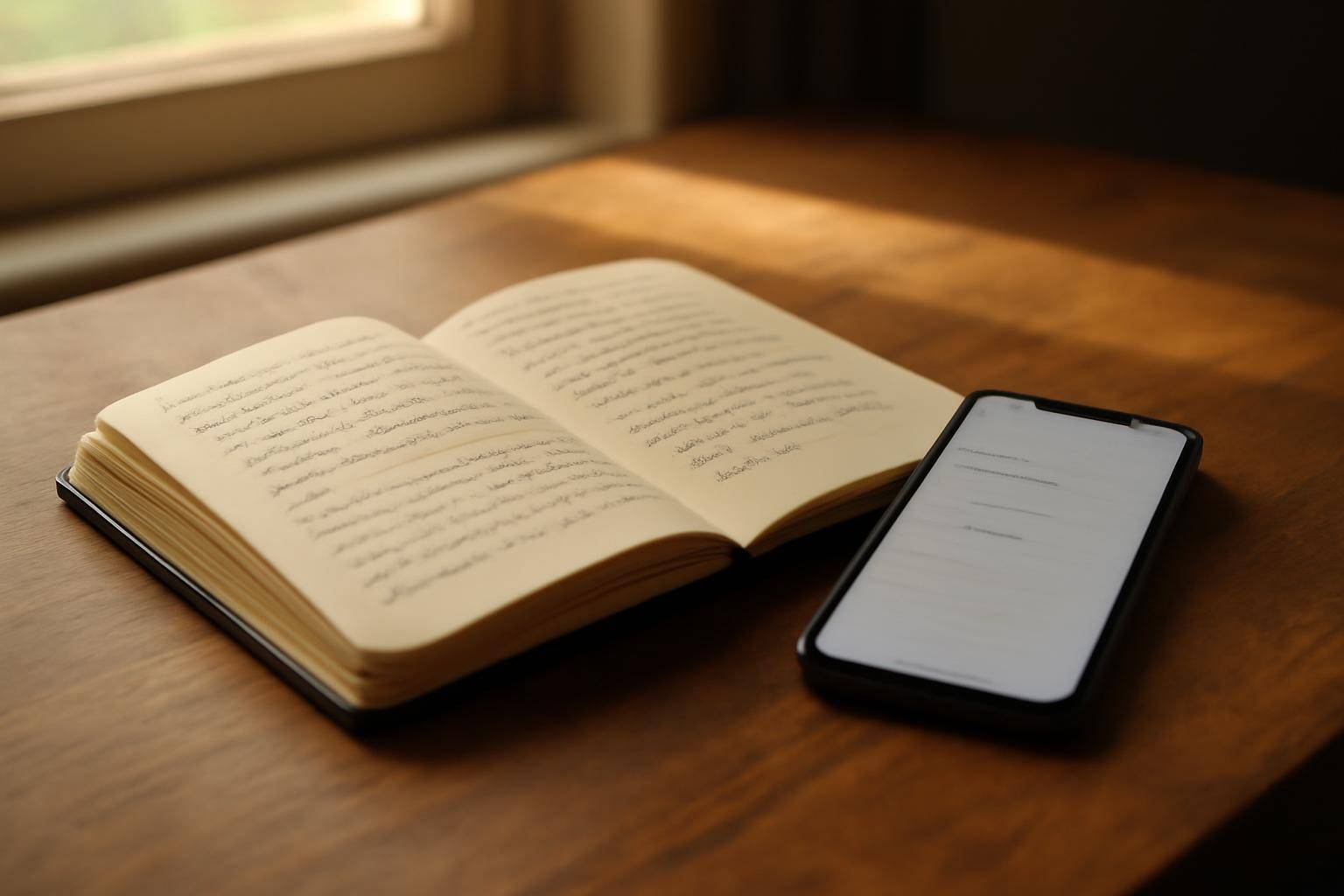
Write it down the moment you hear or read it, with enough context to find later: the source, the date, and where you were. A phone's built-in notes app, a voice memo, or a paper notebook all work; what matters is that capture takes seconds, not minutes. If capture is slow, you'll only save the ones easy enough to screenshot — which quietly turns the archive into whatever a feed happened to serve you that day. A one-line tag — the book, the person, the context — turns a stray line into something searchable instead of just stored.
Where should these entries live?
Keep the archive somewhere that isn't also a drafts folder for social posts. A shared folder for captions and captures tends to blur into one pile, and the posting app's interface starts to shape what gets saved. A separate notebook, a plain text file, or a notes app used only for this purpose keeps the archive answerable to you instead of to an algorithm. Revisiting that separate space on its own, without opening any posting app at the same time, is what keeps the habit from drifting back toward a feed.
Why organize by theme instead of by date?
Sorting chronologically turns the archive into a timeline — effectively a private feed, scrolled in order. Sorting by theme, such as patience, grief, or focus, makes entries retrievable by need instead of by when they were added. That's the difference between curation and a stream: curation means choosing and arranging with intent, while a stream just adds the newest thing to the top. Two terms are worth keeping straight here — an archive is what you build for yourself, and a feed is what a platform builds for engagement. Curation is the ongoing work of keeping the two apart.
When is it okay to share one publicly?
Occasional sharing is fine. Attribute the source in the same post, and resist letting a platform's posting cadence set how often you publish from a private archive. If you're also deciding where to post quote content for a small business, TikTok and Instagram carry different tradeoffs, but the personal archive should outlast whichever platform gets the post. Decide this before you post, not after — a line chosen for what it will do for an audience has already drifted from the archive it came from.
More from the blog
Written by Smorgi Apps at Smorgi Apps. We do not invent download counts or ratings. If a number appears here, it came from App Store Connect or the live listing.